
Quick Answer
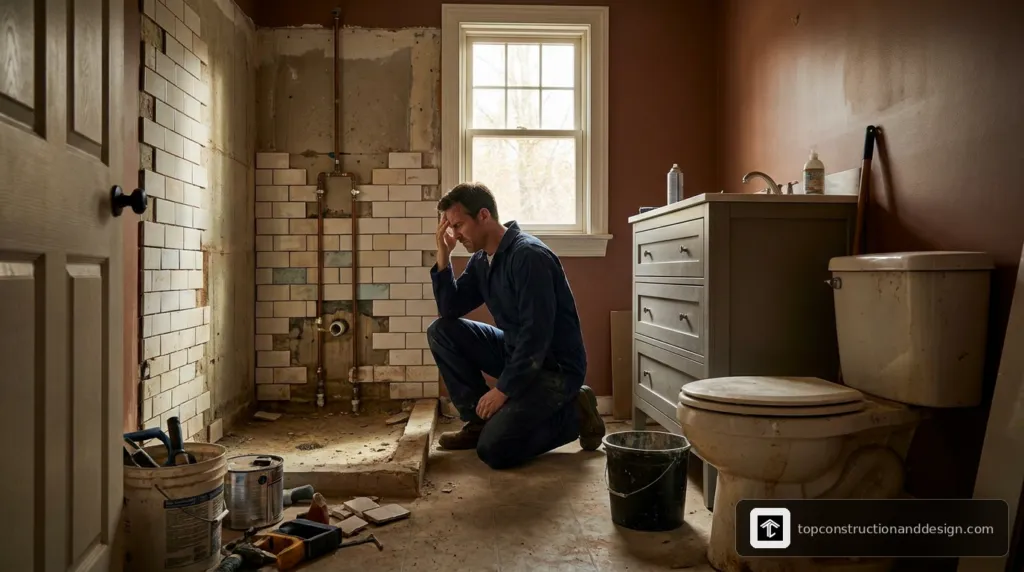
The most common bathroom remodel mistakes to avoid are finalizing a design after demolition begins, moving plumbing without understanding the cost, skipping proper waterproofing and ventilation, underestimating timelines, and choosing finishes before fixtures. The median U.S. bathroom renovation reached $15,000 in 2026, while major remodels hit a median of $25,000, so planning errors get expensive fast. Avoiding these mistakes comes down to sequencing decisions correctly: design, then demolition, then rough-in, then finishes.
Why Do Bathroom Remodel Mistakes Cost So Much in 2026?
Here’s a surprising fact: the median U.S. bathroom renovation now costs $15,000, while major remodels reached a median of $25,000, and the top 10% of projects approached $70,000. Yet most of that spending difference has nothing to do with picking nicer tile. It comes down to layout decisions, water management, ventilation, and sequencing errors that compound once demolition starts.
A bathroom remodel mistake rarely shows up as a single bad decision. It usually shows up as a chain reaction: a plumbing move that wasn’t priced correctly, a waterproofing step that got skipped, or a design that wasn’t finalized before the crew showed up. Understanding where these errors happen, and why, is the single best way to protect your budget and your timeline.
Notably, 82% of renovated bathrooms retained roughly the same footprint, while only 7% were significantly enlarged. That means most remodel failures aren’t about square footage. They’re about how well the existing space was planned, sequenced, and executed.
Mistake 1: Starting Demolition Before Finalizing the Design
Demolition often uncovers damaged framing, outdated wiring, corroded plumbing, or old code violations hiding behind walls. That’s expected. What’s not acceptable is starting demolition before the design, fixture schedule, and lighting plan are locked in.
Once walls are open and a crew is on the clock, every unresolved decision becomes an expensive change order. Finalize your layout, tile pattern, fixture locations, and ventilation plan on paper first. Then produce a written scope of work and confirm product availability before anyone picks up a sledgehammer.
“A carefully considered layout is especially important when moving a toilet, sink, or shower, because drain slope, venting, access, and structural conditions can all complicate the change. Most expensive surprises trace back to a decision that was never finalized before demo day.”
Design-build professionals who document every measurement before work begins consistently avoid the costliest surprises, a pattern echoed across recent design-build project walkthroughs shared by industry professionals.
Mistake 2: Moving Plumbing Without Understanding the Cost
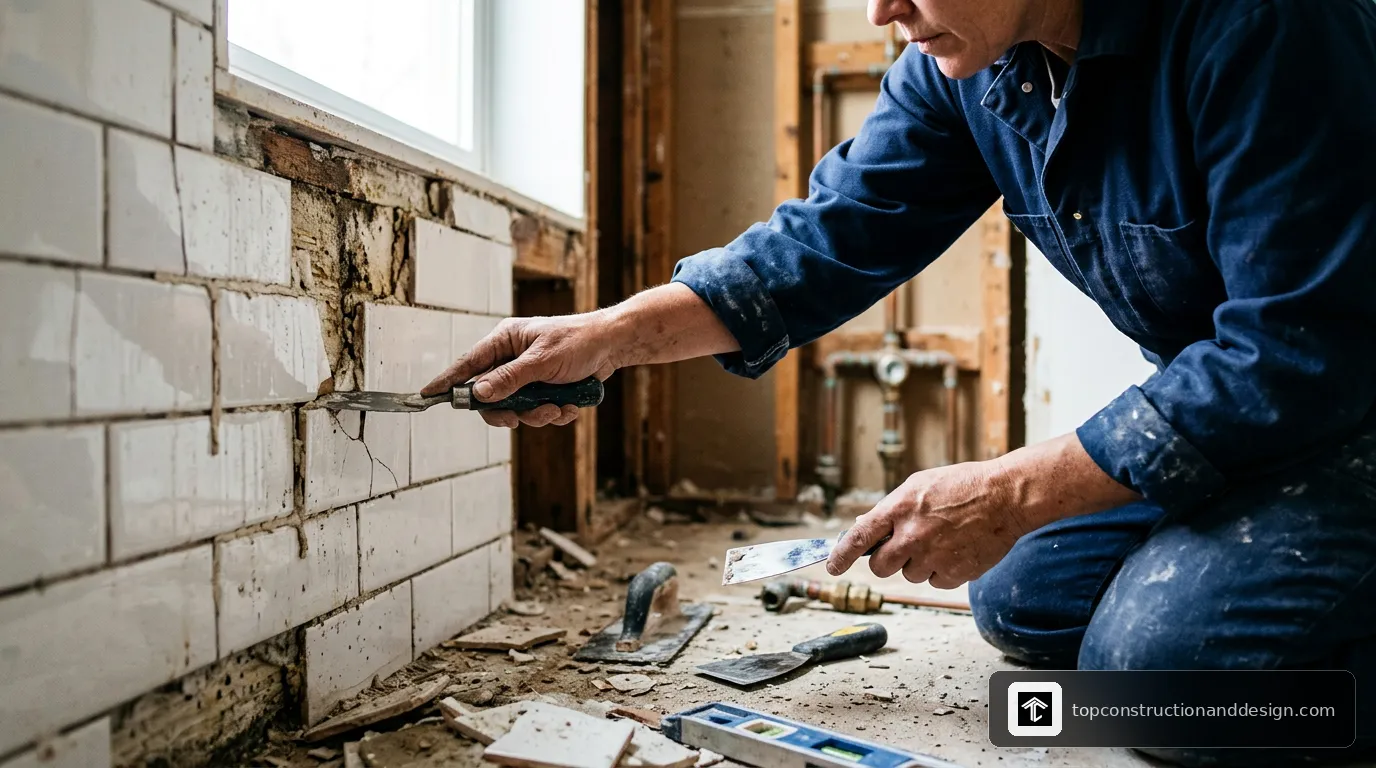
Keeping your toilet, sink, and shower near their current locations is usually the simplest way to control cost. Moving fixtures even a few feet can require new drain lines, updated venting, and sometimes structural modification, especially in older homes where joists and slabs weren’t designed for a different layout.
40% of homeowners changed their bathroom layout, and 38% modified walls during their renovation, which tells you plumbing and structural work is far more common than a simple cosmetic refresh. Before committing to a new layout, ask your contractor to walk through exactly what’s involved in relocating each fixture, including concealed costs like slab-cutting or vent stack relocation.
Local code requirements for drain slope, fixture clearances, and venting vary by jurisdiction, and permitting guidelines like those outlined by residential bathroom remodeling guidelines show how much technical review goes into a seemingly simple fixture move.
Mistake 3: Skipping Waterproofing and Ventilation Planning
Bathrooms are the wettest rooms in the house, yet waterproofing is one of the most frequently rushed steps. Cement board or an equivalent moisture barrier installed correctly behind tile and tub/shower enclosures is essential to prevent mold, rot, and tile failure down the line, a point reinforced by building science guidance on tile backing materials.
Ventilation matters just as much. Poor airflow traps moisture, which accelerates mold growth and can degrade indoor air quality throughout the remodel and long after it’s finished. The EPA’s guidance on remodeling and indoor air quality recommends proper exhaust fan sizing and sealed dust barriers, especially in homes built before the 1980s where materials disturbed during demolition may require extra precaution.
Skipping these steps doesn’t save money. It defers the cost, usually into a bigger repair bill a few years later.
Mistake 4: Choosing Finishes Before Fixtures
It’s tempting to fall in love with a tile pattern or a vanity finish first. But finishes should follow fixture decisions, not precede them. Shower size, vanity length, and toilet placement all dictate how much usable wall and floor space remains for tile, lighting, and storage.
49% of homeowners enlarged their showers in the most recent year, a 10-percentage-point increase year-over-year, reflecting a broader shift toward spa-like, larger-format showers. That shift is also showing up in national design coverage, with the 2026 Houzz emerging trends report and related coverage of 2026 bathroom design trends both pointing to larger showers, longer vanities, and better organization as top homeowner priorities.
If you pick tile before confirming shower dimensions, you risk ordering the wrong quantity, mismatched trim pieces, or a layout that doesn’t account for niches and benches.
Mistake 5: Underestimating the Timeline
More than 40% of homeowners said a clearer timeline would have improved their renovation experience, and a similar share wanted better communication from their contractor throughout the project. Timelines slip most often because of material backorders, inspection scheduling, and discoveries made once walls are opened.
Build in a buffer for lead times on custom vanities, specialty tile, and glass shower enclosures, all of which can take weeks longer than standard stock items. Ask your contractor for a week-by-week schedule with built-in checkpoints, not just a start and end date.
Mistake 6: Ignoring Storage and Everyday Use
About half of homeowners report spending more time in their bathroom after a renovation, particularly for personal care and relaxation activities. That makes storage planning and everyday functionality just as important as aesthetics.
A beautiful floating vanity with no drawer space or a walk-in shower with nowhere to set a bottle of shampoo creates daily friction long after the renovation photos are taken. Architectural Digest’s analysis of common renovation mistakes repeatedly flags inadequate storage planning as a top regret among homeowners who prioritized style over daily usability.
Before finalizing your layout, map out exactly where towels, toiletries, cleaning supplies, and hair tools will live. If the plan doesn’t answer that question, it isn’t finished yet.
Mistake 7: Hiring Based on Price Alone
The lowest bid is rarely the lowest total cost. Contractors who underbid often cut corners on waterproofing, permitting, or structural work, the exact items that cause expensive failures years later. Consumer Reports’ long-standing bathroom remodeling guidance emphasizes verifying licensing, insurance, and references before signing a contract, regardless of how competitive the quote looks on paper.
Ask every bidding contractor the same detailed questions: Who pulls permits? What’s included in the waterproofing scope? What’s the payment schedule tied to? Clear, consistent answers across your questions signal a contractor who plans thoroughly, not just one who prices competitively.
How Much Does a Bathroom Remodel Cost in 2026?
Pricing varies significantly based on scope, materials, location, and the age and condition of your home. As a general reference point, here’s how 2026 national data breaks down by project size and scope, though your specific project may fall outside these ranges depending on structural findings and material selections.
| Project Type | Median Cost | Top 10% Spend |
|---|---|---|
| Overall renovation (all sizes) | $15,000 | Varies by scope |
| Major remodel | $25,000 | ~$70,000 |
| Large bathrooms (100+ sq ft) major remodel | $30,000 | Up 20% year-over-year |
| Smaller bathrooms | $18,000 | ~$44,000 |
These figures are U.S. national benchmarks and shouldn’t be treated as a fixed quote for any individual home. Local labor rates, permitting requirements, housing age, accessibility needs, and material selections can shift your project’s total meaningfully in either direction. A custom quote based on your specific layout, structural condition, and finish preferences is the only reliable way to know your real number.
Homeowners who modified walls: 38%
Footprint kept the same: 82%
Year-over-year increase: 10 points
Significantly enlarged bathrooms: 7%
Wanted better communication: similar share
Spend more time in bathroom post-remodel: ~50%
Key Takeaways
- Finalize your design, fixture schedule, and ventilation plan before any demolition begins to avoid costly mid-project change orders.
- Moving plumbing fixtures adds complexity and cost. Confirm the full scope of drain, vent, and structural work before committing to a new layout.
- Waterproofing and ventilation aren’t optional upgrades. Skipping them defers costs into bigger repairs later.
- Lock in fixture sizes and placement before selecting tile or finish materials to avoid ordering errors.
- Build a realistic, week-by-week timeline with buffers for custom materials and inspections.
- Plan storage around how you actually use the bathroom daily, not just how it photographs.
- Vet contractors on process, licensing, and communication, not price alone. The cheapest bid is rarely the cheapest outcome.
People Also Ask
What is the biggest mistake people make during a bathroom remodel?
The most common and costly mistake is starting demolition before the design, fixture schedule, and lighting plan are finalized. Once walls are open, unresolved decisions turn into expensive change orders.
Should I move my toilet or shower during a remodel?
Only if necessary, since moving fixtures often requires new drain lines, revised venting, and sometimes structural changes. Keeping fixtures near their existing locations is usually the simplest way to control both cost and timeline.
Is a walk-in shower or a bathtub better for resale value?
It depends on your market and household needs; many 2026 renovations favor larger walk-in showers, but removing the only tub in a home can affect resale appeal to families. Discussions like those covered by design coverage comparing tubs and walk-in showers suggest weighing your local buyer pool before removing the tub entirely.
How long does a typical bathroom remodel take?
Timelines vary widely based on scope, but material lead times, inspections, and unexpected structural findings are the most common causes of delay. Over 40% of homeowners say a clearer, more detailed timeline would have improved their experience.
What should never be skipped in a bathroom renovation?
Waterproofing behind tile and shower enclosures, proper exhaust ventilation, and a finalized design before demolition are the three elements that should never be skipped, regardless of budget.
Frequently Asked Questions
What is the median cost of a bathroom remodel in 2026?+
The median U.S. bathroom renovation reached $15,000 in 2026, while major remodels had a median of $25,000, and the top 10% of projects approached $70,000. Actual costs vary based on scope, materials, location, and the condition of your home.
Why is ventilation so important in a bathroom remodel?+
Poor ventilation traps moisture, which accelerates mold growth and degrades indoor air quality long after the project finishes. Proper exhaust fan sizing and sealed dust barriers during construction help protect both the structure and air quality.
Do I need a permit to remodel a bathroom?+
In most jurisdictions, yes, especially for projects involving plumbing relocation, electrical work, or structural wall changes. Permit requirements vary by location, so confirm with your local building department before work begins.
Why did 49% of homeowners enlarge their shower in recent renovations?+
Spa-like, larger showers have become a top priority as homeowners spend more time in renovated bathrooms for relaxation and self-care. This represents a 10-percentage-point increase year-over-year, reflecting a broader shift in bathroom design preferences.
What should I ask a contractor before hiring them?+
Ask who pulls permits, what’s included in the waterproofing scope, how change orders are handled, and what the payment schedule is tied to. Consistent, detailed answers signal thorough planning rather than just a competitive price.
Can I keep my existing layout to save money?+
Yes, keeping fixtures in their existing locations is one of the most reliable ways to control costs, since it avoids new drain lines, venting changes, and potential structural work. In fact, 82% of recently renovated bathrooms kept roughly the same footprint.

