
Quick Answer
An eco-friendly sustainable bathroom remodel combines WaterSense-certified fixtures, low-VOC materials, and durable finishes to cut water use by roughly 20% or more while lowering utility bills and indoor air pollutants. Homeowners can save nearly 13,000 gallons per year on toilets alone, plus thousands more from showerheads and faucets, all while choosing longer-lasting, healthier materials for the home.
Here’s a number that surprises most homeowners: if every household in the U.S. swapped old bathroom faucets and aerators for WaterSense-certified models, the country would save nearly 71 billion gallons of water and $1.6 billion annually. That’s not a hypothetical, it’s an EPA-backed figure that shows just how much waste hides behind a single bathroom fixture. An eco-friendly sustainable bathroom remodel isn’t a fringe design choice anymore, it’s become one of the most cost-effective ways to lower a home’s water and energy footprint while boosting resale value.
This FAQ roundup answers the eight questions homeowners ask most before starting a green bathroom renovation, from water savings math to material choices to what it actually costs. Whether you’re gutting a primary bath or updating a powder room, these answers will help you plan a remodel that’s efficient, healthy, and built to last.
What Is an Eco-Friendly Sustainable Bathroom Remodel?
An eco-friendly sustainable bathroom remodel is a renovation approach that prioritizes water efficiency, low-emission materials, energy savings, and durability over short-term trends. Instead of chasing the cheapest fixtures or fastest install, the goal is choosing products that reduce environmental impact for the life of the bathroom, often 15 to 25 years.
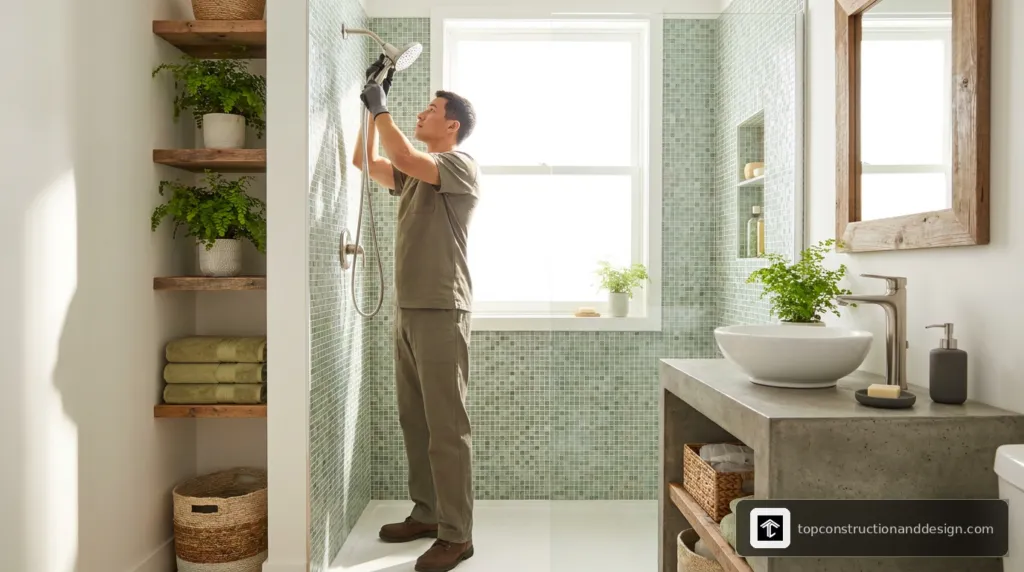
This typically means WaterSense-certified toilets, showerheads, and faucets, low-VOC paints and adhesives, sustainably sourced or recycled-content materials, and smart controls that prevent waste. Coverage from The Guardian’s 2026 guide to sustainable bathrooms notes that even small swaps, like switching a showerhead or choosing water-based sealants, add up to meaningful reductions in a household’s overall footprint.
How Much Water Can WaterSense Fixtures Actually Save?
WaterSense fixtures are certified by the EPA to use at least 20% less water than the federal maximum while performing just as well. According to EPA WaterSense bathroom faucet standards, the savings break down clearly by fixture type, and they compound quickly across a household.
| Fixture | WaterSense Limit | Annual Savings |
|---|---|---|
| Toilets | 1.28 gpf vs. 1.6 gpf federal max (20% less) | ~13,000 gallons and $170+ per household |
| Showerheads | 2.0 gpm vs. 2.5 gpm federal max (20% less) | ~2,700 gallons and 330 kWh per household |
| Faucets | 1.5 gpm vs. 2.2 gpm federal max (32% less) | ~700 gallons per household, ~11,000 gallons lifetime |
The showerhead savings are especially notable because they include energy, not just water. Heating water is one of the largest hidden costs in a bathroom, so a lower-flow showerhead reduces both the water bill and the water heater’s workload at the same time.
What Materials Make a Bathroom Truly Sustainable?
Sustainable bathroom materials fall into a few categories: low-emission finishes, recycled or reclaimed content, and products certified for durability and low toxicity. A 2026 industry summary found that 38% of bath renovators now use low-VOC paints, 18% of new floor installs include recycled-content underlayment, and 65% of bathroom furniture is certified low-formaldehyde emitting, a sign that indoor air quality has become a mainstream priority, not a niche one.
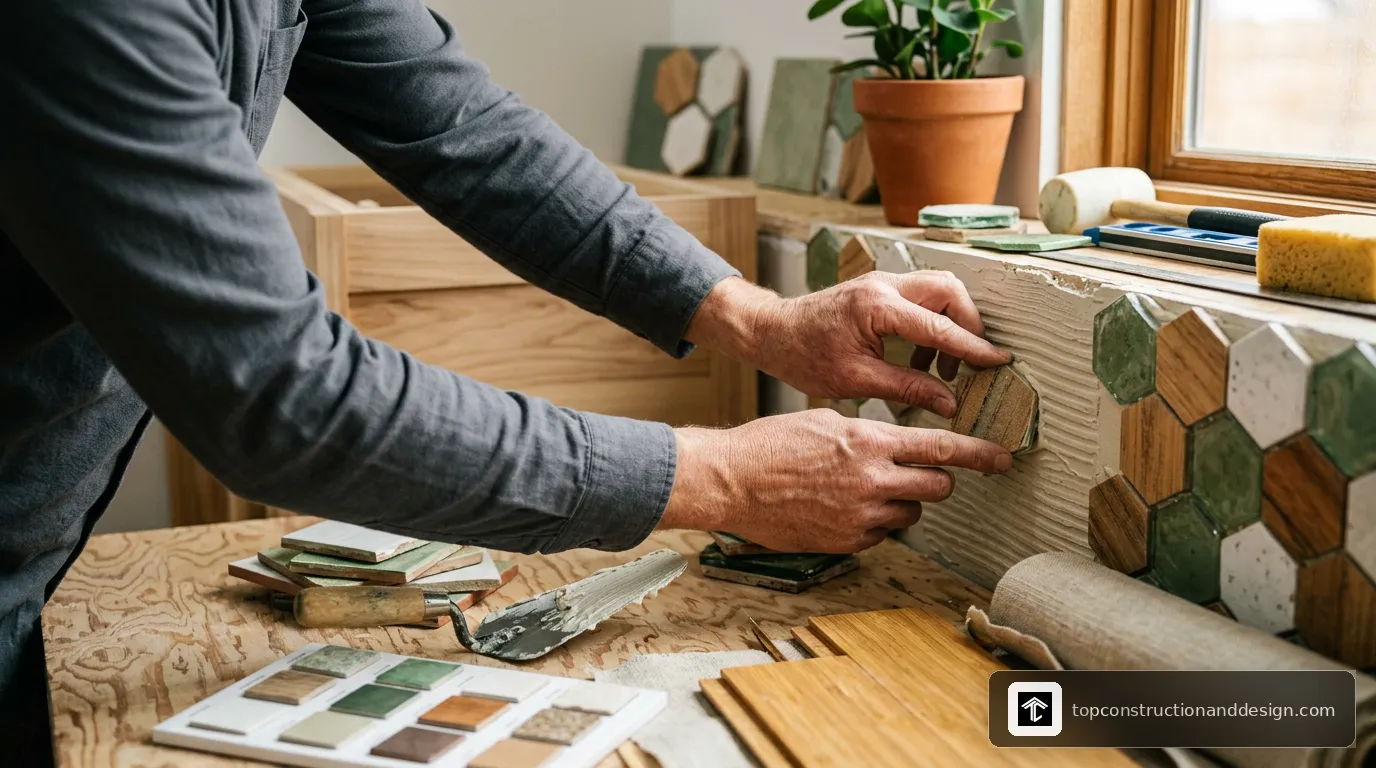
Popular choices include porcelain and ceramic tile made with recycled content, quartz countertops with lower embodied carbon than some natural stones, FSC-certified wood vanities, and water-based sealants and grouts. Living Etc’s roundup of sustainable bathroom trends highlights natural materials like clay plaster, cork flooring, and reclaimed wood as growing favorites for their low environmental impact and biophilic feel.
Neutral, timeless color palettes also play a sustainability role. The NKBA’s 2026 bath trends report found that 96% of respondents favor neutral colors, a shift that reduces the urge to gut-renovate again in five years just to update a trendy color scheme.
How Much Does an Eco-Friendly Bathroom Remodel Cost?
Costs for an eco-friendly sustainable bathroom remodel vary widely, generally from $10,000 to $50,000 or more, depending on the scope of work, the quality of materials, plumbing changes, and your home’s location. A powder room refresh with WaterSense fixtures and low-VOC paint sits at the lower end, while a full primary bath overhaul with custom tile, a low-flow smart shower system, and recycled-content flooring pushes toward the higher end.
Green materials sometimes carry a modest upfront premium compared to standard builder-grade products, but the payback comes through water and energy savings, fewer replacements over time, and stronger resale appeal. Pricing always depends on your specific project scope, so the most accurate number comes from a detailed on-site consultation rather than a generic estimate.
Do Smart Fixtures Really Help Sustainability Goals?
Yes, smart bathroom technology is increasingly paired with sustainability because it prevents waste that happens even with efficient fixtures. Motion-sensor faucets, app-controlled shower presets, and leak-detection sensors stop water from running longer than necessary, a common source of hidden waste even in WaterSense-rated bathrooms.
Industry trend coverage points to intelligent faucets, programmable temperature presets, and atmospheric lighting as a growing category, since they improve daily comfort while actively reducing overuse. Pairing smart controls with certified low-flow fixtures is quickly becoming the standard combination for homeowners who want both convenience and measurable conservation.
What Sustainable Bathroom Trends Matter Most in 2026?
The dominant 2026 trends center on durability, water efficiency, and healthier indoor materials rather than short-lived aesthetic fads. Duravit’s 2026 bathroom trend outlook and USA Today’s coverage of this year’s bathroom trends both point to water-efficient fixtures, natural materials, and long-life products as the top purchase drivers among renovating homeowners.
WaterSense showerheads: 2.0 gpm
Household savings: ~13,000 gal/yr (toilets)
Recycled-content underlayment: 18%
Low-formaldehyde furniture: 65%
Neutral palette preference: 96%
Goal: fewer replacement cycles
How Can I Reduce Waste During My Remodel?
The simplest way to cut remodel waste is to donate or resell working fixtures instead of sending them to a landfill. Industry data shows 14% of homeowners already donate old bathroom fixtures, and that number is expected to keep climbing as habitat-style resale and reuse programs become more accessible.
Other waste-reduction strategies include choosing tile and flooring made from recycled content, requesting a demolition plan that separates recyclable materials from landfill-bound debris, and selecting fixtures rated for a longer service life so you’re not replacing them again in a few years. 2026 bathroom remodeling trend analysis notes that durability and long-life products are now a leading purchase driver, not an afterthought.
How Do I Choose a Contractor for a Green Remodel?
Look for a contractor who can speak specifically to WaterSense certifications, low-VOC product lines, and material sourcing, not just general remodeling experience. Ask for examples of past sustainable projects, request documentation on the emission ratings of paints and adhesives they use, and confirm they have a plan for recycling or donating removed materials.
A contractor experienced in eco-friendly remodels should also help you weigh upfront cost against long-term water and energy savings, since that math is central to justifying premium sustainable materials. This is where a detailed, project-specific quote matters more than a generic price estimate, since every bathroom’s plumbing, layout, and material needs are different.
People Also Ask
Is a WaterSense label required by law?
No, WaterSense is a voluntary EPA certification, not a legal mandate. Manufacturers choose to certify products because it signals verified water efficiency to consumers and often qualifies homeowners for local rebates.
Do low-flow fixtures reduce water pressure noticeably?
Modern WaterSense fixtures are engineered with aerating and pressure-compensating technology, so most homeowners notice little to no difference in performance. Many report the spray feels just as strong as older, higher-flow models.
Are eco-friendly bathroom materials more expensive?
Some sustainable materials carry a modest upfront premium, but many, like low-VOC paint, cost about the same as standard options. The bigger financial upside comes from long-term water, energy, and replacement savings rather than sticker price alone.
What is the most impactful single upgrade for sustainability?
Replacing an old toilet with a WaterSense model tends to deliver the biggest single impact, saving a household nearly 13,000 gallons and over $170 per year. It’s also one of the simplest upgrades to complete without a full remodel.
Can I make an existing bathroom greener without a full remodel?
Yes, swapping fixtures for WaterSense-certified models, repainting with low-VOC paint, and adding aerators are all effective upgrades that don’t require gutting the room. These smaller steps still deliver measurable water and air-quality benefits.
Frequently Asked Questions
What makes a bathroom remodel “sustainable”?+
A sustainable bathroom remodel prioritizes WaterSense-certified fixtures, low-VOC materials, durable finishes, and reduced waste during construction. The goal is lowering water and energy use while improving indoor air quality over the full life of the bathroom.
How much water do WaterSense fixtures save each year?+
WaterSense toilets can save nearly 13,000 gallons annually, showerheads about 2,700 gallons plus 330 kWh, and faucets around 700 gallons per household. Combined, these upgrades can meaningfully lower both water and energy bills.
What is the cost range for an eco-friendly bathroom remodel?+
Costs typically range from $10,000 to $50,000 or more depending on scope, material quality, plumbing work, and location. A custom quote based on your specific project is the most reliable way to get an accurate number.
Are low-VOC paints and adhesives worth using in a bathroom?+
Yes, bathrooms have high humidity and limited ventilation, which can trap emissions from standard paints and adhesives. Low-VOC products, now used by 38% of bath renovators, reduce indoor air pollutants without sacrificing durability or finish quality.
Do sustainable bathroom upgrades increase home resale value?+
Water-efficient fixtures, neutral timeless finishes, and durable low-emission materials are increasingly attractive to buyers who want lower utility costs and healthier indoor spaces. Many of these upgrades also reduce the need for near-term renovations, which supports long-term value.
Can smart bathroom technology reduce water waste?+
Yes, motion-sensor faucets, programmable shower presets, and leak sensors prevent water from running unnecessarily, adding another layer of savings on top of WaterSense-certified fixtures. This pairing is increasingly common in 2026 bathroom design.
What should I ask a contractor before starting a green remodel?+
Ask about their experience with WaterSense-certified installations, low-VOC material sourcing, and their plan for recycling or donating removed fixtures. A qualified contractor should also help you compare upfront material costs against long-term water and energy savings.
Key Takeaways
- WaterSense-certified toilets, showerheads, and faucets use at least 20% less water than federal maximums, saving a household nearly 13,000 gallons on toilets alone each year.
- Faucet upgrades save around 700 gallons annually per household, and nationwide adoption could save 71 billion gallons and $1.6 billion each year.
- Low-VOC paints, recycled-content flooring, and low-formaldehyde furniture are now mainstream choices, not niche upgrades, among 2026 bath renovators.
- Neutral, timeless palettes preferred by 96% of homeowners reduce the urge to re-renovate, extending the useful life of sustainable materials.
- Smart fixtures like sensor faucets and app-controlled showers add a second layer of water savings beyond WaterSense certification alone.
- Costs for a full eco-friendly bathroom remodel generally range from $10,000 to $50,000 or more, depending on scope, materials, and location.
- Choosing a contractor experienced in sustainable sourcing and waste reduction is key to maximizing both environmental and financial returns.
An eco-friendly sustainable bathroom remodel pays off in ways that go far beyond the finished look, lowering your water bill, improving indoor air quality, and reducing waste sent to landfills. If you’re ready to plan a bathroom that’s efficient, healthy, and built to last for decades, reach out to our team for a custom quote tailored to your home’s specific layout, materials, and goals.

