
Published July 2026 | 9 minute read
| Quick Answer: A new gunite pool in South Florida typically takes three to five months from signed contract to first swim, with permitting the single biggest variable in that timeline. Homeowners should budget for a shell built to handle flooding, high heat, and hurricane season rainfall, plus a code required safety barrier around the water. Working with a licensed local builder who pulls permits correctly the first time is what keeps a project on schedule. |
Why Mid-Summer Is Decision Season for a South Florida Pool Project
If a pool build has been on the wish list, the middle of hurricane season is actually a smart time to start the paperwork. Permit reviews, engineering sign offs, and material orders all take weeks, so homeowners who start design and permitting now are positioned to break ground once the wettest stretch of the season eases. Waiting until fall means competing with every other homeowner who had the same idea at the same time.
Below, we break down what actually drives the pool construction timeline, which shell material makes sense for our climate, and the permitting and safety rules every South Florida homeowner should understand before signing a contract.
Pool Construction Timeline: What to Expect, Phase by Phase
Every backyard is different, but the sequence of a South Florida pool build is fairly consistent. Here is a realistic phase by phase breakdown for a standard in ground gunite pool.
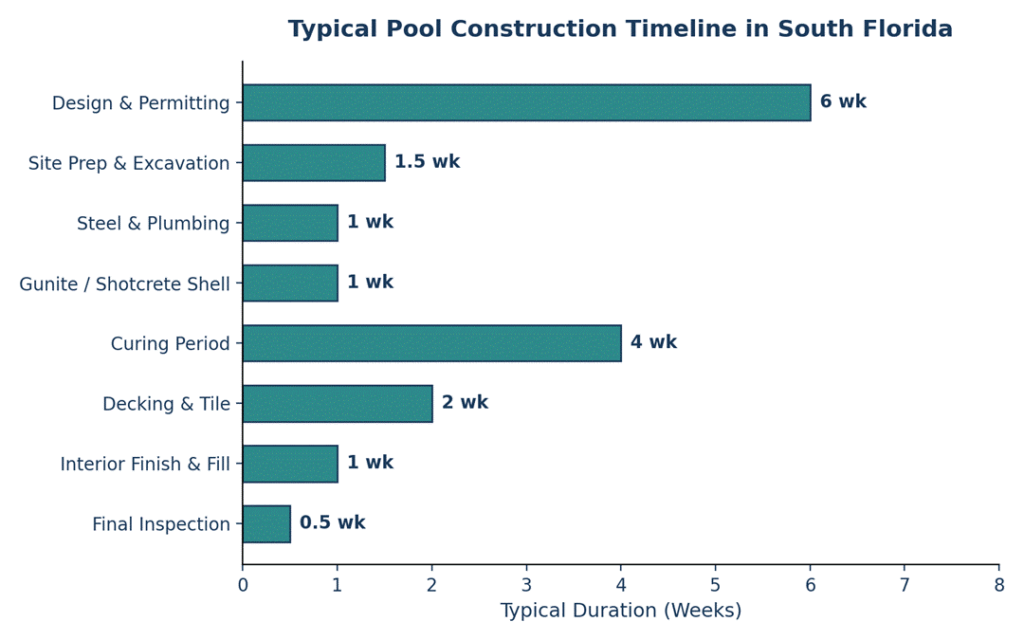
Typical phase durations for a South Florida gunite pool build. Actual timelines vary by permitting jurisdiction and project scope.
- Design and permitting (about 6 weeks): finalized drawings, engineering, HOA approval if applicable, and building department review.
- Site prep and excavation (about 1 to 2 weeks): layout staking, digging, and rough grading.
- Steel and plumbing (about 1 week): rebar cage, bond beam, and plumbing lines set before the shell is sprayed.
- Gunite or shotcrete shell (about 1 week): the structural shell is sprayed and shaped.
- Curing period (about 3 to 4 weeks): the shell needs time to cure properly before decking and tile work begin.
- Decking and tile (about 2 weeks): pavers, tile, coping, and surrounding hardscape.
- Interior finish and fill (about 1 week): plaster, pebble, or quartz finish, then fill and start up equipment.
- Final inspection (a few days): building department sign off, including the safety barrier.
Choosing a Pool Shell Material for a South Florida Climate
The shell material is one of the biggest decisions in the entire project, and it matters more here than in drier, cooler climates. Heat, humidity, storm exposure, and the occasional flood event all put extra stress on a pool structure.
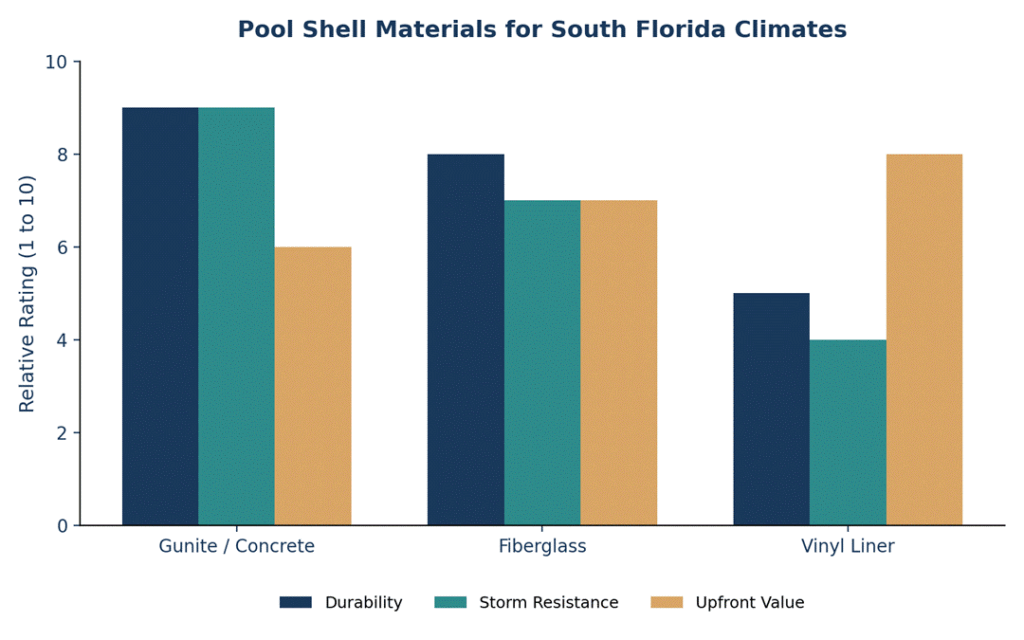
Relative comparison of common pool shell materials for South Florida conditions. Ratings are illustrative, based on typical material performance.
| Material | Typical Lifespan | Storm and Flood Suitability | Best For |
| Gunite / Concrete | 25+ years with resurfacing | Excellent, handles ground movement and flooding well | Custom shapes, long term durability |
| Fiberglass | 20 to 30 years | Good, but limited to pre-formed shapes | Faster installs, smoother surface |
| Vinyl Liner | 10 to 15 years, liner replaced periodically | Weaker in flood prone or high water table areas | Lower upfront cost |
Permitting and Safety Barriers: Do Not Skip This Step
Florida building code requires a safety barrier around any residential pool, spa, or hot tub, which can take the form of a fence, a screened enclosure, or approved pool alarms and door alarms depending on the layout of the home. Permitting also covers electrical bonding, backflow prevention, and setback requirements from the property line and septic systems where applicable.
Because permit requirements vary by city and county across Fort Lauderdale, Broward, Miami-Dade, and Palm Beach, it is worth working with a team that pulls permits in these jurisdictions regularly. Our pool construction team manages the entire permitting process, so homeowners are not stuck decoding building department paperwork on their own.
Designing Around Florida Weather
A pool that looks great in a rendering still needs to perform through a Florida summer. A few climate specific considerations we walk every homeowner through:
- Pool decking: durable stone, concrete pavers, brick, or porcelain tile all hold up better than materials that trap heat or degrade with humidity.
- Flooding and soil movement: shells should be engineered to resist sinking, wall cracking, and erosion during heavy rain events.
- Landscaping integration: the plants and grading around the pool affect drainage as much as they affect looks.
For a closer look at plant selection and drainage planning, see our guide to hardscaping and landscaping for South Florida properties.
What a Pool Adds to a South Florida Home
Beyond day to day enjoyment, a well built pool is one of the more visible upgrades a South Florida home can make, especially paired with updated decking, lighting, and surrounding landscaping. Many homeowners combine a pool project with a broader backyard refresh, including a covered patio or outdoor kitchen area.
See examples of completed pool and hardscape work in our project portfolio, including a recent pool and concrete project in Davie.
Frequently Asked Questions
How long does it take to get a pool permit approved in South Florida?
Timelines vary by city and county, but plan on roughly four to eight weeks for initial review, with additional time if revisions are requested. Starting the design phase early in hurricane season helps avoid the fall permitting rush.
Is gunite or fiberglass better for a Florida climate?
Gunite and concrete shells tend to hold up best against Florida’s combination of heat, humidity, and occasional flooding since they can be custom engineered for the site. Fiberglass is a solid option for faster installs with fewer custom shape requirements.
Do I need a fence if I already have a screened pool enclosure?
In many cases a code compliant screened enclosure can satisfy the safety barrier requirement, but this depends on the specific enclosure design and local code. A licensed contractor can confirm what applies to a specific property.
Can landscaping be added at the same time as pool construction?
Yes, and it is often more efficient to plan landscaping and hardscaping alongside the pool build rather than after, since grading, drainage, and access paths overlap between the two projects.
What areas does Top Construction and Design serve for pool construction?
Pools are built throughout Fort Lauderdale, Pompano Beach, Hollywood, Aventura, and the greater Miami-Dade area, along with Broward, Martin, St. Lucie, and Palm Beach counties.
| Ready to Build Your South Florida Pool? Top Construction and Design handles design, permitting, and construction from start to finish for homeowners across Fort Lauderdale, Broward, Miami-Dade, and Palm Beach. Call 954-318-2322 for a free estimate |

